

Firearm Safety for Parents
Whether or not your family owns a firearm, understanding basic firearm safety helps protect children and prevent injury.
Children may encounter firearms in homes, vehicles, or other settings, so it is important for all adults to know how firearms should be stored and handled safely.
In PLEDGE, students learn that preventing unauthorized access to firearms and being aware of mental health warning signs are key ways to reduce the risk of firearm injury.
Secure Firearm Storage and Methods
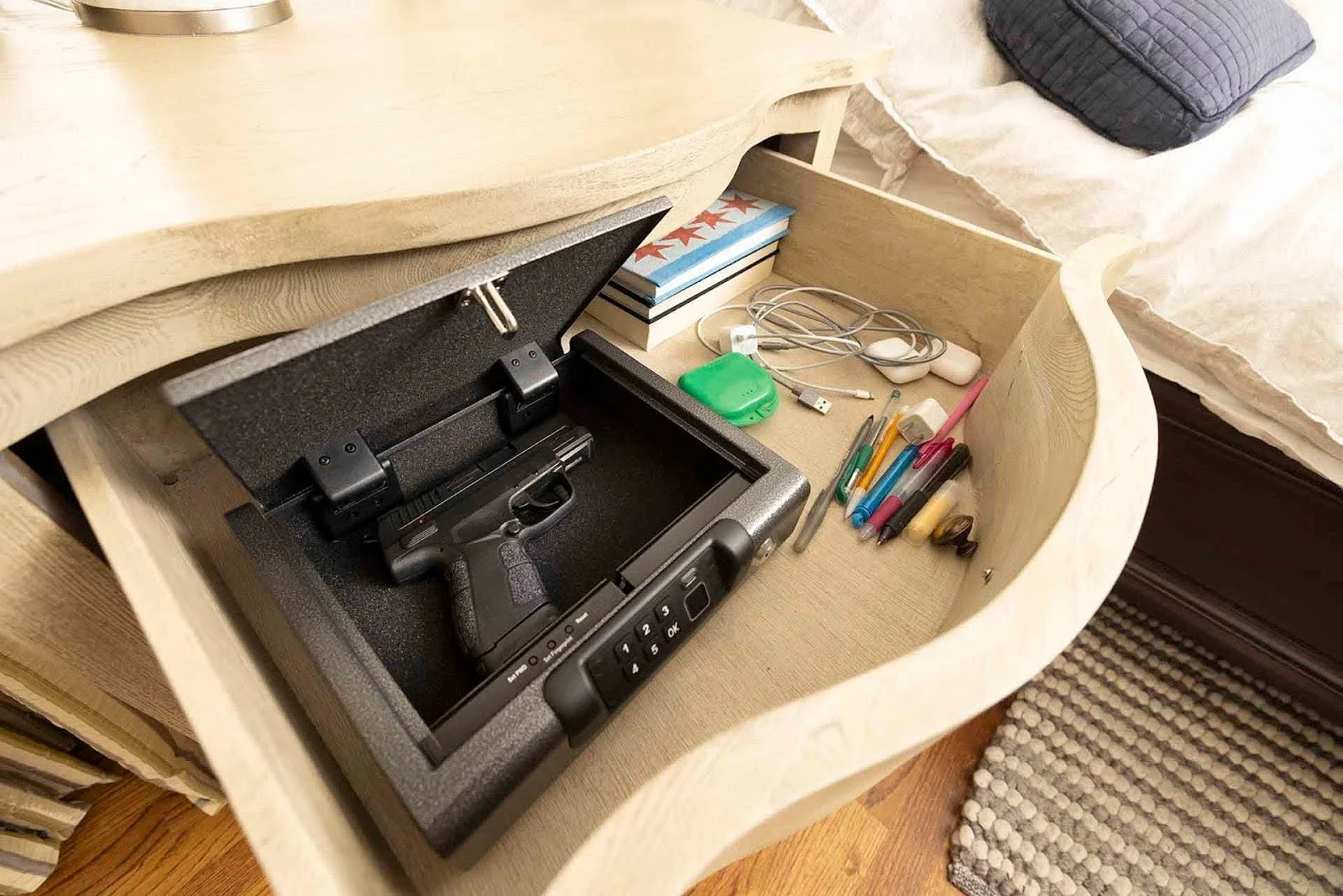
Gun Safe
A heavy-duty safe that stores firearms inside
Various types with different locking mechanisms (key, fingerprint, etc.)
Most secure and reliable— designed to completely prevent unintentional handling of firearms
Higher cost
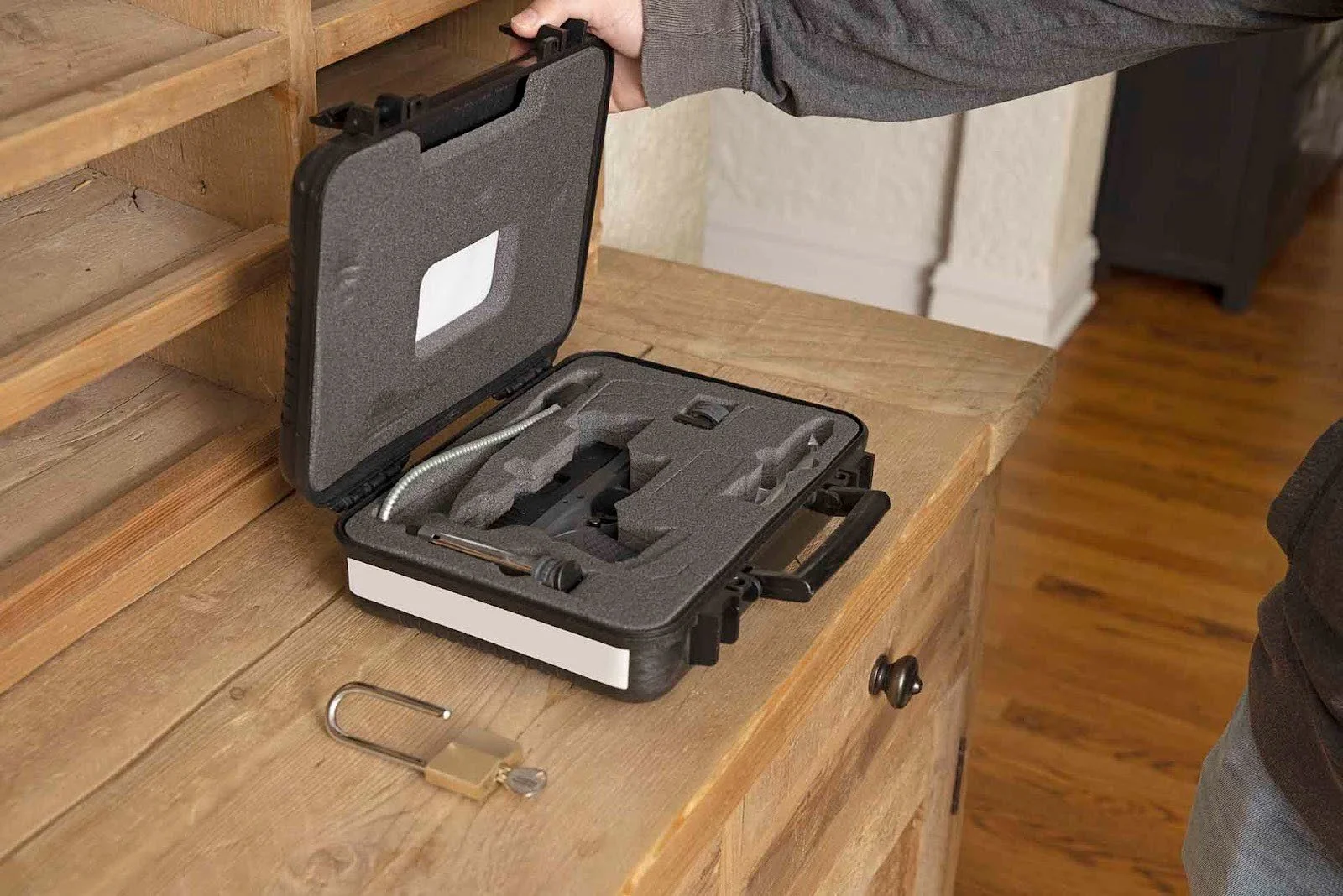
Lockbox
A small, portable, lockable container
Moderate security – designed to completely prevent unintentional handling of firearms, though less secure than firearm safe
Lower cost
Securely storing firearms helps prevent children and others from accessing them when they should not.
The safest way to store a firearm is unloaded, locked, and separate from ammunition, which is also locked. There are many different storage methods that should be evaluated by the needs of the family.
Remember: No storage method is effective unless consistently used.
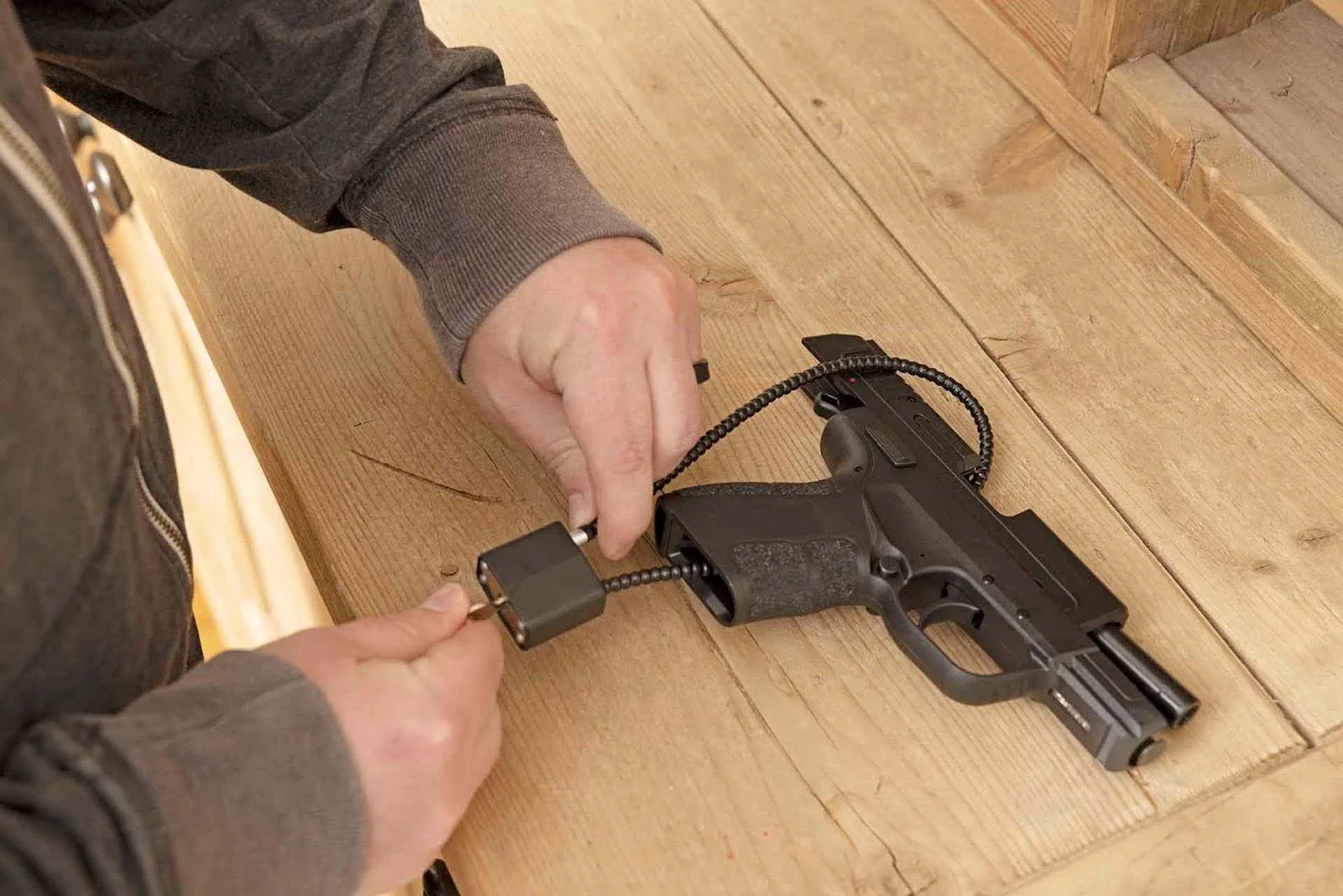
Cable Lock
A cable is threaded through the firearm to block operation
Less secure — not designed to entirely prevent access to the firearm
Lower cost
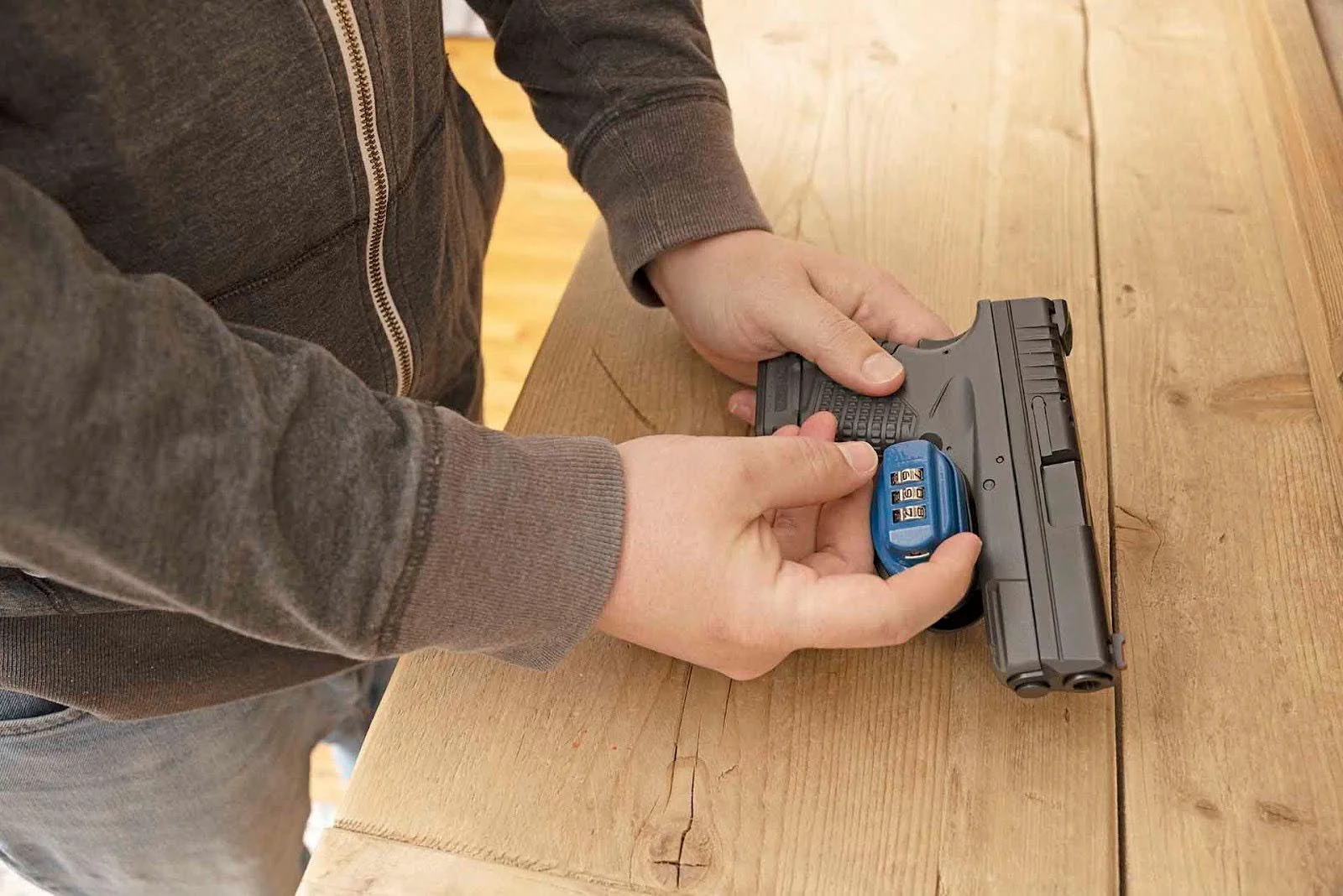
Trigger Lock
Prevents the trigger from being pulled
Less secure — not designed to entirely prevent access to the firearm
Lower cost
Photos sourced from the American Academy of Pediatrics.
6 Safety Rules of Firearm Handling
Questions to ask yourself right now:
Are firearms present in your home right now?
If yes, how is each firearm currently stored?
What changes, if any, are needed to improve safety?
The decision to own a firearm is a personal one and may look different from family to family.
Regardless of whether your family owns a firearm, it is important for everyone to understand that there are universal rules for handling firearms safely anytime a firearm is present.
These rules apply at home, during recreation, or in any setting where a firearm may be encountered.
Treat every firearm as if it were loaded.
Always keep the muzzle of the firearm pointed in a safe direction.
Always keep your finger off the trigger and outside the trigger guard unless you intend to fire a weapon.
Know your target, its surroundings, and beyond. Check that the areas in front of and behind your target are safe before shooting.
Know how to properly operate your firearm.
Store your firearm securely to prevent unauthorized use.

Mental Health and Firearm Access
Firearm access during emotional distress, particularly for youth experiencing depression, bullying, or impulsivity, greatly increases the risk of suicide.
Young individuals are more likely to act on impulse and may not grasp the permanence of their actions.
Studies have shown that firearms are fatal. More than 90% suicide attempt using firearms are successful compared to only 4% of suicides using pill ingestion are fatal.[6]
Firearms used in youth suicide typically belong to a parent.[7]
The risk of youth suicide is the lowest when children are living in households with no firearms present. However, it's important to understand that this is not the reality for everyone and there are ways to provide a safe environment for children while still owning a firearm. A study found that among firearm-owning families, youth living in households where all firearms are locked and unloaded and their ammunition is also stored away in a seperate location are at a lower risk of suicide than those living in households with less secure storage methods. [8]
Parents also often underestimate their children's ability to access firearms. A survey found that 22% of children reported having accessed a firearm at home, even though their firearm-owning parents believed they never had. [9]
This is why taking all necessary precautions should be taken when securing your firearms.
Protective Steps for Parents
Store firearms securely and limit unsupervised access.
Check in regularly on your child’s emotional well-being.
Normalize asking for help and provide easy access to mental health resources
FAQs
What if I don’t own a firearm? Why is firearm safety still important for me and my child?
Even if there are no firearms in your home, your child may visit homes where firearms are present. Learning how to recognize unsafe situations and what to do can help keep them safe—no matter where they are.
Should I ask other parents about firearms in their homes when my children visit? How do I bring something as sensitive as firearms up to other adults?
Yes. Normalize asking about safety — just like you would ask about allergies, seat belts, or adult supervision. Here are some tips to bring up this conversation:
Phrase the conversation the same you would regarding other safety measures in a home. Normalizing the discussion of this topic will make it feel less awkward and will ensure everyone's comfortability. Leading with your own experience often makes the conversation feel less judgmental and more collaborative. Remember this doesn’t have to be an intense or confrontational exchange.
Possible Parent Conversation Starter : “Thanks so much for hosting the kids! I always like to check in about safety beforehand. My child hasn’t ever been around firearms so I want to ensure they behave appropriately at your house. Do you have any firearms at your house and if so, how are they stored? I will be sure to inform my child about the safety rules at your house before they come over.”
See this resource: How to Talk to Other Parents about Guns in the Home by the Johns Hopkins Center for Gun Violence Solutions for more information.
Can I store my firearm safely and still have access if needed?
We combine a thoughtful, human-centered approach with clear communication and reliable results. It’s not just what we do—it’s how we do it that sets us apart.
What if I want to learn more about firearm safety?
There are lots of resources, such as the Department of Justice’s Safe Storage of Firearms publication. See our full list of firearm safety resources HERE.
How worried should I be about school shootings?
It’s completely understandable to feel anxious and concerned about school shootings, especially given the intense media coverage surrounding these tragic events.
However, it's important to recognize that school shootings account for a very small proportion of pediatric firearm injuries and deaths. In fact, a study found that in the United States school shootings account for fewer than 1% of all firearm deaths among children.
The majority of firearm-related injuries among children and adolescents occur in other contexts, such as unintentional shootings or incidents involving firearms in the home.
This is why our curriculum places a strong emphasis on secure firearm storage. By promoting safe storage practices, we aim to prevent unauthorized access to firearms, which can significantly reduce the risk of suicides, accidental shootings, and other firearm-related incidents.